
Infinity Empires
IFun GamesStrategy
4.5862.00 Reviews
- Version
- 3.0.3
- Installs
- 500.00K
- Age Rating
- Everyone
Screenshots
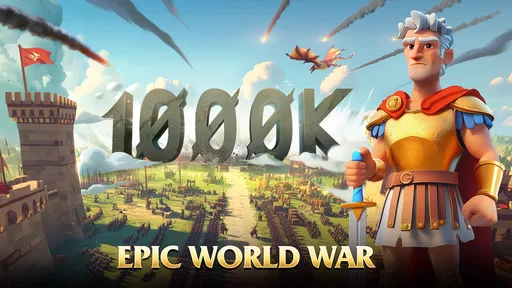
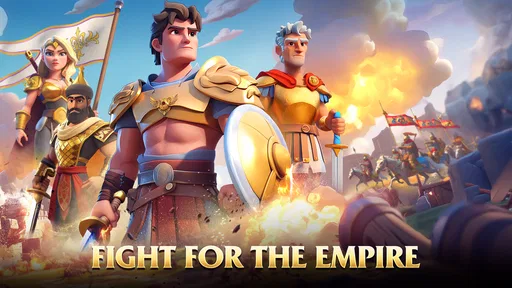
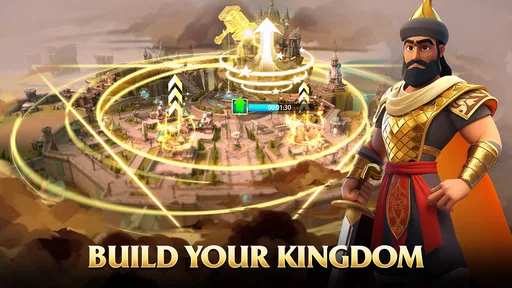
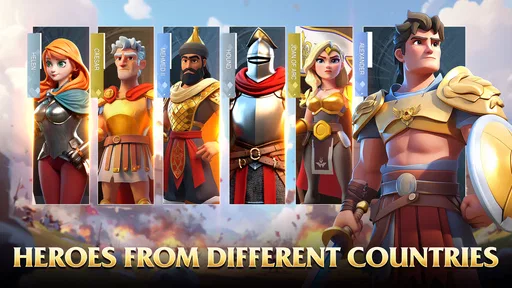
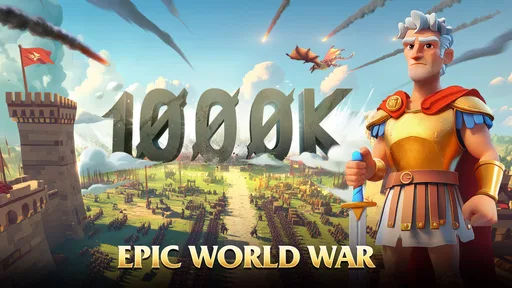
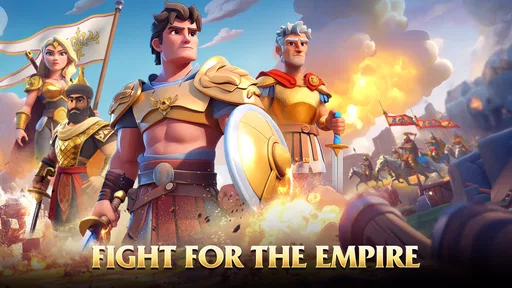
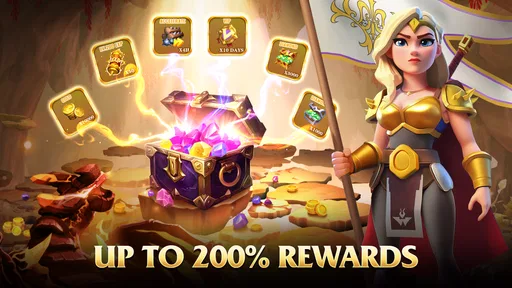
Our Review of Infinity Empires
 Analysis by Appyee
I spent time with Infinity Empires as a strategy game from IFun Games, and my first impression was that it aims for a familiar but appealing fantasy-management loop: build strength, make decisions, and push back against dark forces while shaping an empire of your own. It is free to start, rated for Everyone, and available for devices running Android 7.0 or later. That combination makes it easy to try, although the presence of optional purchases means the experience deserves a closer look than the store summary alone suggests.
What I like most is that the game gives strategy fans a reason to think beyond a single battle. The fantasy setting supplies the motivation, but the enjoyable part is deciding how to use limited time and resources. I found myself weighing short-term progress against the need to prepare for tougher situations later. It is not the kind of game I would recommend only for its visual theme; its appeal depends on whether you enjoy gradual development, repeated decisions, and the satisfaction of seeing an empire become more capable.
How Infinity Empires feels in its current version
The current release is version 3.0.3, which matters because this is not a brand-new first attempt still waiting to establish its basic identity. The game was released on March 31, 2024, and its present version suggests an experience that has already moved beyond its earliest form. I would still treat it as an evolving mobile strategy game rather than a finished, unchanging product. That distinction is important: you can begin playing now, but the long-term experience may continue to be shaped by future adjustments.
Its audience is already fairly substantial. The game has passed 500 thousand installs and holds an average rating of 4.5 from around 33 thousand ratings, with roughly 862 written reviews. Those figures do not guarantee that every player will enjoy it, but they do tell me that it has attracted enough attention to establish a real player base. I would be more comfortable recommending it to someone who likes games with ongoing progression than to someone looking for a compact, fully self-contained adventure.
The central fantasy is easy to understand: darkness threatens the world, and your role is to build an empire capable of resisting it. That framing works because it gives ordinary management choices a clear purpose. Improving a settlement or strengthening an army feels more meaningful when it is connected to survival and expansion. At the same time, players who prefer direct action may find the pace too deliberate. Much of the satisfaction comes from planning and waiting for development to pay off rather than controlling every moment of a battle.
The first hours: learning what deserves attention
My advice to a new player is not to chase every available improvement immediately. Early progress in a strategy game can feel generous, and that often encourages careless spending of resources. In Infinity Empires, I found it more useful to identify the upgrades that support the way I wanted to play, then protect enough resources for the next meaningful step. A broad, unfocused approach can make an account feel busy without making it genuinely stronger.
This is one of the first non-obvious lessons: progress is easier to judge by what it unlocks than by how many small actions you complete. If an upgrade improves your ability to handle future obstacles, it is usually more valuable than a minor increase that only looks impressive on the current screen. I recommend checking the next few requirements before committing resources. That simple habit reduces the chance of reaching an important bottleneck with nothing available to solve it.
The game also suits short visits better than a single marathon session. I could imagine opening it during a commute, after work, or while taking a brief break, making a few decisions, and leaving it until the next useful task is ready. That rhythm is convenient, but it can also encourage automatic checking. If you do not enjoy games that ask you to return regularly, the empire-building structure may feel like a chore instead of a relaxing routine.
Strategy choices that matter more than they first appear
The most useful way to approach the game is to separate immediate survival from long-term development. I prefer keeping a reserve for unexpected demands instead of spending everything as soon as it becomes available. This creates a little less visible progress in the moment, but it gives me flexibility when a new obstacle appears. In a mobile strategy game, flexibility is often more valuable than a perfectly optimized plan that collapses after one interruption.
A second practical tip is to treat timing as a resource. When I know I will be away from the game, I would rather begin a worthwhile development action than start several small tasks that require constant attention. When I have only a minute, I focus on collecting, checking priorities, and preparing the next decision. This makes the game fit around real life instead of forcing every session to follow the same pattern.
Another trade-off involves specialization. Developing every part of an empire evenly feels safe, but it can produce a settlement that is average at everything and excellent at nothing. Concentrating on a clear priority can create stronger momentum, although it may expose a weakness elsewhere. I would not follow one rigid build order. I would choose a direction based on the obstacles currently slowing me down, then adjust when the cost of maintaining that direction becomes too high.
That approach is especially helpful for players who dislike wasting resources. Mobile strategy games often make early choices seem reversible, only for later stages to reveal their consequences. Even without treating every decision as permanent, I found it sensible to pause before spending valuable materials on a change that does not solve an immediate problem. Reading the requirement chain first is more useful than reacting to the most noticeable button.
Free access and the pressure to spend
Infinity Empires is free to download and play, but optional in-app purchases range from $0.99 to $114.99 per item. That wide range is the most important financial detail for a potential player. I would begin without spending anything and use the early experience to decide whether the pacing feels fair for my habits. A purchase can be reasonable if it saves time in a game I already enjoy, but it is harder to justify when it is being used to repair frustration created by slow progress.
My personal rule would be to set a limit before buying anything. Strategy games built around gradual development can make a small delay feel urgent, especially when a stronger upgrade is visible but not yet affordable. Waiting a day or changing priorities often gives a clearer picture of whether the purchase is genuinely useful. The best value for a free-to-play player is not necessarily the largest bundle; it is the option that supports a chosen play style without turning every future decision into another spending question.
This is also where the game may not suit everyone. If you want a strategy title with no purchase prompts or no temptation to accelerate progress, a premium game with a single upfront cost may be a better match. If you are comfortable treating purchases as optional conveniences and can maintain a firm budget, the free entry point is more attractive. I would not call the model a reason to avoid the game automatically, but I would keep it in mind from the first session.
How it compares with familiar strategy alternatives
Compared with a traditional offline strategy game, Infinity Empires is better suited to players who enjoy returning to a living project over time. An offline title usually gives me more control over the pace: I can play for an hour, stop, and return without feeling that the world has been waiting for my next check-in. Infinity Empires is more comfortable as a continuing routine, where decisions are distributed across several shorter sessions.
Compared with a purely tactical battle game, it places more emphasis on preparation and development. Players who want immediate control over units may prefer a title where every match begins on equal terms. Here, the condition of the empire affects how confident I feel about the next challenge. That creates a stronger sense of ownership, but it also means that early planning and patience matter more than quick reactions.
It also differs from a simple city-building game because the fantasy conflict gives development a sharper purpose. I am not just arranging a settlement for appearance or watching numbers rise. The threat of darkness gives each improvement a practical reason. Still, anyone seeking a calm decorating experience should look elsewhere; the game’s identity is tied to overcoming danger, not merely designing a pleasant kingdom.
What existing players should know about version 3.0.3
For someone returning after an earlier version, the clearest confirmed point is that the game is now at version 3.0.3. I would approach that update as part of the product’s ongoing evolution rather than assume that one version number explains every change in the player experience. A version label can indicate continued maintenance, but it does not by itself tell me whether a particular balance issue, feature request, or progression concern has been resolved.
New players should therefore avoid copying an old guide without checking the current in-game requirements. Strategies that worked well during an earlier stage of a game’s life can become less efficient when progression costs or priorities change. My practical method is to test a plan for several development cycles, note where progress slows, and then revise it. That is more reliable than treating any outside recommendation as permanent.
Existing players may also notice that their habits need to change as the empire grows. An opening strategy built around quick expansion may not remain comfortable once upkeep, stronger opposition, or more demanding requirements enter the picture. I would regularly review whether my current priorities still solve the obstacles in front of me. Continuing an old routine simply because it worked earlier is one of the easiest ways to waste time.
Where the experience still asks for patience
The biggest limitation is the possibility of a slow middle game. Early progress can be satisfying because every action feels meaningful, but the same structure may become repetitive when improvements take longer and choices begin to resemble a checklist. Players who need constant novelty may lose interest before the empire reaches a more developed state. I found that setting a small goal for each session helped, but that technique cannot replace variety if the underlying loop does not appeal to you.
There is also a mental cost to managing several priorities at once. The game asks me to remember what I am building toward, what resources I should reserve, and which improvement will remove the next obstacle. That is enjoyable when I am in a planning mood, but tiring when I only want a quick distraction. The same systems that create depth can make the game feel demanding during a busy day.
I would also be cautious about judging progress only through visible power. A larger number or newly completed upgrade can feel rewarding, but it does not always mean the empire is prepared for the next challenge. A balanced reserve, sensible timing, and a clear development path may matter more than chasing the most impressive immediate increase. This is a game where patience can outperform enthusiasm.
Who should try it, and who should skip it
I think Infinity Empires is a good fit for players who enjoy fantasy settings, gradual empire development, and decisions that remain meaningful across multiple sessions. It is particularly suitable if you like checking a game several times a day, planning around limited resources, and watching a long-term project become stronger. The Everyone rating also makes it approachable for a broad audience, although the strategic systems may still be more appealing to patient players than to very young children.
I would recommend skipping it if your ideal strategy game is a self-contained campaign with a clear ending and no ongoing purchase model. I would also look elsewhere if you dislike waiting, repeated resource management, or the feeling that progress is built through many small decisions. A premium offline strategy game will probably suit you better in those cases. Likewise, players who want fast competitive matches may prefer a tactical title where preparation outside the match has less influence.
For a realistic everyday scenario, imagine having ten minutes before dinner. I would open the game, collect what is ready, inspect the next development requirement, and start one task that can continue while I am busy. Later, I would return with a clearer purpose instead of wandering through menus. That workflow makes the game feel useful as a short-session hobby. On a quiet weekend, I could spend longer comparing priorities, but I would still avoid turning every available resource into an immediate upgrade.
What I would watch as the game continues
The next thing I would watch is how the balance between free progression and optional acceleration develops. Because the game is free and includes purchases across a broad price range, long-term trust will depend on whether non-paying players can continue making satisfying decisions. I would also pay attention to whether later progression introduces fresh strategic choices or mainly increases the time needed to repeat familiar actions.
I would be interested in seeing how IFun Games handles the tension between accessibility and depth. The game is easy enough to approach, but its strongest moments come from thinking ahead. If future changes make the early experience clearer without removing meaningful trade-offs, that would improve the game for newcomers. If simplification removes too much consequence from planning, experienced players could lose the reason they stayed.
Version 3.0.3 gives me a reasonable point of entry, but I would keep expectations grounded. The current release is evidence of an active product rather than a promise about every future direction. My recommendation is to start free, learn the resource rhythm, and decide after you have experienced the slower part of progression. Do not judge it only by the first burst of rewards, and do not spend simply because a timer or requirement makes you impatient.
After trying it, I see Infinity Empires as a thoughtful mobile strategy game with a clear fantasy purpose and a comfortable short-session rhythm. Its strengths are planning, gradual growth, and the satisfaction of making an empire more capable over time. Its weaknesses are the potential for repetition, the need for patience, and the pressure that optional purchases can create. For me, it is worth trying if you enjoy building toward a long-term goal and can keep your spending under control. If you want instant action or a fully predictable one-time purchase, another strategy game will likely be a better friend.
Verdict
Strengths of Infinity Empires
- Strategic base building offers meaningful choices beyond simple resource collection.
- Alliance cooperation adds depth through shared goals and coordinated attacks.
- The fantasy setting gives the game a distinctive identity and visual atmosphere.
- Regular events can provide extra objectives for players seeking additional challenges.
- Multiple unit types encourage experimentation with different battle formations.
Limitations of Infinity Empires
- Progress can feel slow without frequent play or careful resource management.
- Large-scale battles may become difficult to follow when many units clash at once.
- The interface can feel crowded for newcomers learning the game’s many systems.
- Competitive rankings may favor players who spend heavily on upgrades and boosts.
- Long construction and research timers can limit short play sessions.
Similar Picks in This Category
View All
Clash of Clans
Supercell4.5

Plants vs. Zombies™
ELECTRONIC ARTS3.7

Lords Mobile: Kingdom Wars
IGG.COM4.5

Clash Royale
Supercell4.4

State.io — Conquer the World
CASUAL AZUR GAMES4.1

Car Driving School : Car Games
Spark Game Studios3.9
Frequently Asked Questions
What is Infinity Empires?
Infinity Empires is a mobile strategy game focused on building an empire, developing resources, researching technologies, training armies, and competing with other players. You gradually expand your territory, strengthen your defenses, and make decisions about alliances and attacks. The game combines city management, real-time strategy elements, and online competition, so progress depends on both long-term planning and how actively you participate.
Is Infinity Empires free to download and play?
Infinity Empires can generally be downloaded and played for free on supported mobile devices, although it may include optional in-app purchases. These purchases can provide resources, speed up construction or research, and offer additional items, but spending is not always required to explore the main gameplay systems. Before downloading, check the store listing for the current device requirements, supported regions, and purchase information.
Does Infinity Empires require an internet connection?
Yes, Infinity Empires is primarily designed as an online game and normally requires a stable internet connection. Your city, resources, events, alliances, and battles are connected to online servers, meaning the game may not work correctly while offline. A reliable Wi-Fi or mobile data connection is recommended, especially during competitive activities, where interruptions could affect actions or cause progress to update slowly.
Is Infinity Empires suitable for beginners?
Infinity Empires is accessible to newcomers, but it can become fairly detailed as more buildings, technologies, commanders, resources, and military options become available. The early tutorial helps explain the basic systems, while regular missions provide useful rewards and direction. Beginners should focus on upgrading essential facilities, completing objectives, joining an active alliance, and learning how to manage resources before attempting difficult battles.
Does Infinity Empires include multiplayer features?
Multiplayer is an important part of Infinity Empires. Players can interact with others through alliances, cooperative objectives, territory competition, events, and battles. Joining a helpful alliance can make progression easier because members may share assistance, coordinate strategies, and participate in group activities. However, the online environment also means that experienced or highly active players may create a more competitive experience for those who prefer playing casually.
Play our best games!


